


5 min read
Should I Take Creatine While on GLP-1? Safety, Timing, and Dosing
Yes — for most healthy adults, creatine monohydrate is safe to take alongside GLP-1 medications like semaglutide or tirzepatide. There is no established direct interaction between creatine and GLP-1 drugs. The main practical concerns are GI tolerance and hydration, both of which are manageable with the right approach to dosing and timing.
Medical disclaimer: This article is for general education only and is not medical advice. GLP-1 medicines are prescription drugs and your personal risk depends on your medical history, kidney function, and other medications. If you are unsure, speak to your prescriber or pharmacist before starting creatine.
For most healthy adults, there is no established direct interaction between creatine monohydrate and GLP-1 medicines. But GLP-1s can cause gastrointestinal side effects and slow gastric emptying, which can affect tolerance and how oral supplements are absorbed. Here is what the evidence says and how to approach it practically. A steady 4.5 g daily dose — three gummies, no loading phase.
What GLP-1 Medicines Do That Matters for Supplements
GLP-1 receptor agonists such as semaglutide and tirzepatide are used for weight management and metabolic health. They work partly by slowing gastric emptying, which reduces appetite and keeps food in the stomach longer. The side effects most relevant to supplements are predictable: nausea, vomiting, diarrhoea, constipation, and general abdominal discomfort, particularly during dose increases.
These effects matter for any supplement you take orally, not just creatine.
Are There Known Interactions Between Creatine and GLP-1 Drugs?
Creatine monohydrate is one of the most studied sports nutrition ingredients, and major sports nutrition guidance consistently reports no evidence of serious adverse effects in healthy people when used at appropriate doses.
For GLP-1 medicines, official prescribing information raises a general caution about delayed gastric emptying and its potential to affect absorption of other oral medications. This is not a creatine-specific warning — it is a broad note that applies to any oral substance taken alongside a GLP-1.
The evidence-based answer to "Should I take creatine while on GLP-1?" is: there is no documented creatine-specific interaction, but there are practical reasons to be careful about GI tolerance and hydration. Both are manageable with the right approach to dosing.
Practical Guidance: Dosing, Timing, and GI Tolerance

If you choose to take creatine while on a GLP-1, prioritise tolerability and consistency over speed. The most practical approach for most people is skipping the loading phase entirely. Loading at 20 grams per day is more likely to aggravate gastrointestinal upset, and it offers no meaningful long-term advantage over a steady daily maintenance dose.
Taking creatine with a meal rather than on an empty stomach improves tolerance for many people. If nausea is a regular issue, splitting your daily dose into two smaller portions can reduce the likelihood of discomfort — creatine monohydrate gummies make this straightforward since each gummy delivers 1.5g, so you can take two with breakfast and one later in the day rather than all at once. Compared to mixing powder into a drink, a pre-portioned gummy format can also be easier to stomach when appetite is already reduced.
Hydration becomes more important on GLP-1s, particularly during dose increases when nausea and vomiting can flare. If you cannot keep fluids down at all, pause non-essential supplements and contact your clinical team. Understanding how creatine affects water retention is also worth reading if you are monitoring weight changes on a GLP-1.
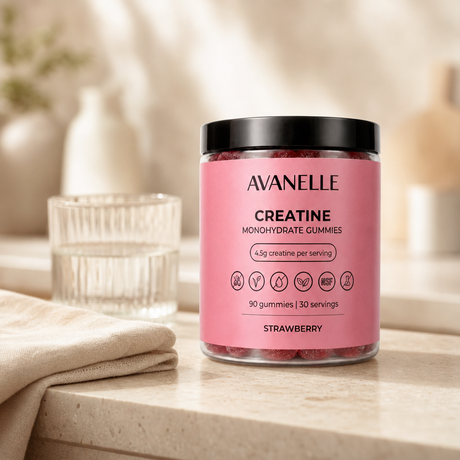
A modest dose you won't skip
Three gummies, 4.5 g of creatine monohydrate, no loading phase. Exactly the steady daily dose this article describes — without the scoop.
- 4.5 g per serving
- No loading needed
- Sugar-free
- Vegan
Special Considerations: Older Adults, Kidney Disease, and Polypharmacy
If you are older, rapid weight loss can make it harder to maintain muscle and strength without resistance training and adequate protein. Creatine has evidence for supporting training adaptations and muscle function across populations, but your clinician should weigh this against your full medical context and medication list.
If you have known kidney disease, a history of unexplained elevated creatinine, or you take multiple medications where absorption timing matters, do not self-prescribe creatine. GLP-1 labels explicitly raise absorption considerations due to slowed gastric emptying, and creatine safety data is strongest in otherwise healthy individuals. The safest step is a direct conversation with your prescriber.
If you take other prescription medicines, we cover specific combinations in more detail in our guides to creatine and statins, creatine and metformin, and creatine and SSRIs.

What to Say to Your Clinician
You can use this language with your prescriber or pharmacist:
"I am taking a GLP-1 medicine and I am considering creatine monohydrate at a maintenance dose with no loading phase. Do you see any concerns given my kidney function labs, hydration risks from GI side effects, and any oral medications I take that require consistent absorption?"
FAQ
Should I take creatine while on a GLP-1 medicine?
For most healthy adults, there is no established interaction. The main practical concerns are GI tolerance and hydration. Start with a daily maintenance dose, skip loading, and speak with your prescriber if you have any kidney or medication concerns.
Can GLP-1 medicines change how creatine works?
GLP-1s slow gastric emptying, which may change the rate of absorption of oral products. There is no established creatine-specific interaction. Taking creatine with a meal rather than on an empty stomach can help with tolerance.
Should I avoid a creatine loading phase on GLP-1?
Yes, in most cases. Loading is more likely to worsen GI upset, which is already a common side effect of GLP-1 medicines. A steady daily maintenance dose of 3 to 5 grams is the safer approach.
Is creatine safe to take with semaglutide or tirzepatide?
There is no established direct interaction with either drug. The main considerations are GI tolerance and hydration. If you have kidney disease or take multiple medications, speak with your prescriber first.
Can I take creatine with retatrutide?
Retatrutide is an investigational GLP-1/GIP/glucagon receptor agonist. There is no creatine-specific interaction data for it, but the same GLP-1 guidance applies: no documented direct interaction, with GI tolerance and hydration the main considerations. Use a daily maintenance dose, skip loading, and check with your prescriber.
What if I am drug-tested in sport?
Choose a creatine product that has been third-party tested for banned substances and label accuracy. Creatine monohydrate itself is not a banned substance, but independent testing offers added assurance against contamination.
Avanelle Creatine Monohydrate Gummies deliver 4.5g of pure creatine monohydrate per 3-gummy serving — sugar-free, 100% vegan, with no artificial colours, no loading required, and easy to take with a meal. Shop all flavors.

The dose is easy. The habit is the hard part.
4.5 g of creatine monohydrate in three sugar-free gummies — nothing to measure, nothing to mix, nothing to wash up.
See all options












































