


2 min read
Creatine Gummies Side Effects: What to Expect (and What to Ignore)
The most commonly reported side effect of creatine gummies is a small, temporary rise in scale weight — typically 1–2 lbs in the first two weeks — caused by water retained inside muscle cells, not fat. Beyond that, most people experience no side effects at all. The concerns you may have read about — kidney damage, hair loss, acne — are not supported by current evidence at standard doses.
 4.5 g of creatine monohydrate, in a format you'll actually finish.
The One Real Side Effect: Water Retention
When your muscles store creatine, they pull water in with it. This causes a modest, temporary increase in scale weight during the first 1–2 weeks of supplementation. For most women this is 0.5–1 kg. It plateaus once muscle creatine stores are full and does not represent body fat in any way.
If you notice your weight ticking up slightly in week one, this is normal and expected. It’s a signal that the creatine is being taken up by your muscles, which is exactly what you want.
Possible (But Less Common) Effects
Mild digestive discomfort affects a small number of people, usually when creatine is taken on an empty stomach or in a large single dose. Gummies are less likely than powder to cause this because the dose is distributed across several pieces rather than all arriving at once. Taking your gummies with a meal or a glass of water typically resolves any mild stomach discomfort.
Bloating is occasionally reported, again most often on an empty stomach or during a loading phase. At a standard maintenance dose of 3–5 g per day, bloating is uncommon.
Concerns That Aren’t Supported by Evidence
Kidney damage is the most persistent myth around creatine. Multiple long-term studies in healthy adults show no adverse effect on kidney function at doses of 3–5 g/day. Creatine does raise creatinine levels in bloodwork — which can look like an abnormal result — but this is a direct metabolic byproduct, not a sign of kidney stress. If your doctor sees elevated creatinine and you take creatine, let them know, as it changes how the result is interpreted.
Hair loss gained attention from a single small study measuring DHT levels. Subsequent research has not replicated the finding, and no study has shown actual hair loss caused by creatine supplementation.
Acne is not a documented side effect of creatine in controlled research.
Dehydration is theoretically possible only if you’re not drinking enough water while exercising. Creatine draws water into muscles, not away from the rest of your body, so standard hydration during exercise is all you need.

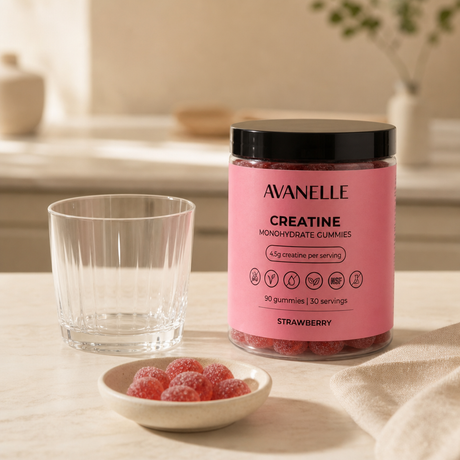
The best form is the one you keep taking
The same creatine monohydrate any powder gives you, 4.5 g per serving, sugar-free and vegan with no artificial colours. The difference is whether the bottle is still going in month three.
- 4.5 g per serving
- Monohydrate
- Sugar-free
- No artificial colours
Who Should Be Cautious
Creatine is well-studied and considered safe for healthy adults. The groups who should check with a doctor first are:
- People with existing kidney disease or a single functioning kidney
- Anyone taking medications that affect kidney function
- Pregnant or breastfeeding women (not because creatine is known to be harmful, but because research in this specific population is limited)
If you take hormone replacement therapy (HRT) or GLP-1 medications, existing evidence suggests creatine is safe alongside both, but it’s worth a quick conversation with your prescriber if you’re unsure.
The Bottom Line
Creatine monohydrate has one of the strongest safety records of any supplement available. The International Society of Sports Nutrition classifies it as safe and effective for healthy adults. Side effects at standard doses are minimal: some temporary water retention, occasionally mild digestive discomfort. The serious concerns circulating online are not backed by current evidence.
Ready to try it? Avanelle creatine gummies come in five fruit flavours and deliver a clean 4.5g dose of creatine monohydrate per serving.

Same molecule. Different odds of finishing the bottle.
4.5 g of creatine monohydrate in three gummies — no mixing, no grit, no shaker in the sink.
See all options












































