


bone density 4 min read
Creatine and Perimenopause: Why It Matters More Than You Think
Perimenopause is one of the most overlooked windows for creatine supplementation — and one of the most impactful. As oestrogen declines, your body's ability to synthesise and store creatine falls with it. The result is accelerated muscle loss, faster bone density decline, and reduced brain energy availability. Supplementing at 3–5 g/day directly addresses all three, and the clinical evidence supporting this is growing rapidly.
 Three gummies a day — small enough to fit a routine you already have.
Why Oestrogen and Creatine Are Linked
Women already have significantly lower creatine stores than men — roughly 70–80% lower — partly due to lower average muscle mass and partly because oestrogen plays a role in creatine synthesis and uptake. As oestrogen levels fall during perimenopause, this natural disadvantage worsens.
The consequences are not subtle. Loss of muscle mass (sarcopenia) accelerates sharply in the years around menopause, with women losing an estimated 1–2% of muscle mass per year from their mid-40s onward. Bone mineral density declines at a similar rate. Energy levels drop. Cognitive function — particularly memory and processing speed — often suffers. Creatine doesn't cause any of this, but falling creatine stores are part of the mechanism behind it.
What the Research Shows
Muscle and Physical Performance
Multiple clinical trials confirm that creatine supplementation combined with resistance training significantly improves muscle strength and lean mass in peri- and postmenopausal women compared to exercise alone. A 2025 review of creatine across women's life stages (published in the Journal of the International Society of Sports Nutrition) concluded that the peri/postmenopausal period is one of the strongest indications for creatine use in women.
Bone Density
A 12-month randomised controlled trial in postmenopausal women found that creatine supplementation with resistance training reduced femoral neck bone mineral density loss to just 1.2%, compared to 3.9% in the placebo group — a clinically meaningful difference. The same study showed improvements in femoral shaft periosteal width, a predictor of bone bending strength.
It's important to note: the bone benefits require resistance training. Creatine alone, without exercise, has not consistently shown effects on bone mineral density. The combination is what matters.
Cognitive Function and Mood
Brain fog, slowed thinking, and mood instability are among the most disruptive symptoms women report during perimenopause. A 2025 randomised controlled trial (the CONCRET-MENOPA study) tested creatine supplementation in 36 peri- and postmenopausal women over 8 weeks. The results were notable:
- Reaction time improved significantly in the creatine group vs placebo (1.2% improvement vs 6.6% worsening)
- Frontal brain creatine levels increased measurably on MRI spectroscopy
- Mood swing severity was reduced
- Serum lipid profiles improved
This is consistent with broader research showing creatine supports brain energy metabolism — particularly relevant when oestrogen-related declines in brain energy availability are already occurring.
Sleep Quality
Poor sleep is one of the hallmark complaints of perimenopause. A 2024 study in menopausal women found that creatine supplementation was associated with improvements in self-reported sleep quality in perimenopausal participants. The mechanism is plausible: brain creatine supports ATP replenishment during sleep, and sleep disruption is known to deplete brain energy reserves.
Does Creatine Interact with HRT?
No known interactions exist between creatine and hormone replacement therapy. Both can be used concurrently, and some researchers suggest they may have complementary effects — HRT addressing hormonal deficiency directly, creatine supporting the downstream metabolic consequences. For a detailed breakdown, see our guide on creatine and HRT.
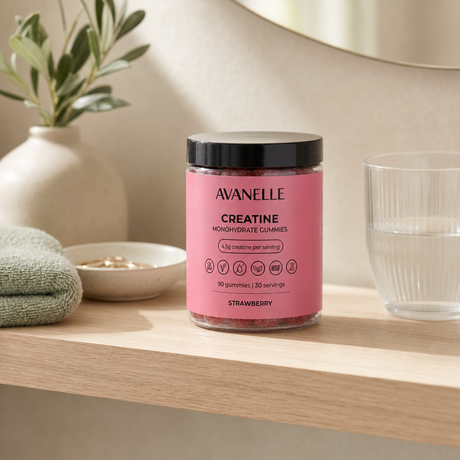
Made to fit the routine, not rearrange it
4.5 g of creatine monohydrate in three gummies, taken whenever suits — with breakfast, with everything else. No mixing and no loading phase.
- 4.5 g per serving
- 3 a day
- Sugar-free
- Vegan
How to Use Creatine During Perimenopause
Dose: 3–5 g of creatine monohydrate per day. No loading phase required. Some researchers suggest women in perimenopause consider the higher end of this range (closer to 5 g) to counter the reduced creatine synthesis associated with falling oestrogen.
Pairing: Resistance training amplifies every benefit described above. Creatine without any strength training will still support brain and recovery outcomes, but the muscle and bone benefits are strongest when combined with at least 2–3 sessions of resistance exercise per week.
Timing: Consistency matters more than timing. Pick a time you'll actually take it every day. Taking it with a meal may reduce any chance of mild stomach discomfort.
The Bottom Line
Perimenopause is not just a hormonal event — it's a metabolic one, and creatine is directly implicated. The combination of lower endogenous creatine synthesis, accelerating muscle and bone loss, and declining brain energy availability makes this one of the clearest windows of opportunity for creatine supplementation across a woman's life. The clinical evidence, while still growing, is pointing consistently in the same direction.
Perimenopause also reshapes the gut microbiome — gut diversity and the oestrogen-processing bacteria of the “estrobolome” shift as hormones fall, which can affect digestion, mood, and immunity. If you are optimising for this stage, our guide to the best probiotic for women covers the strains that matter most.
Avanelle creatine gummies deliver 4.5g of creatine monohydrate per serving (1.5g per gummy) in a format designed for daily consistency — no measuring, no mixing, no forgetting.

One more thing in the morning. That's all it asks.
4.5 g of creatine monohydrate, three sugar-free gummies, one bottle a month.
See all options












































